29 October 2026 · 9 min read
What Is Serviced Accommodation? A UK Landlord's Guide for 2026
Serviced accommodation explained in plain English: what it is, how it differs from Airbnb, holiday lets and buy-to-let, the 2026 rules, and how landlords run it hands-off.
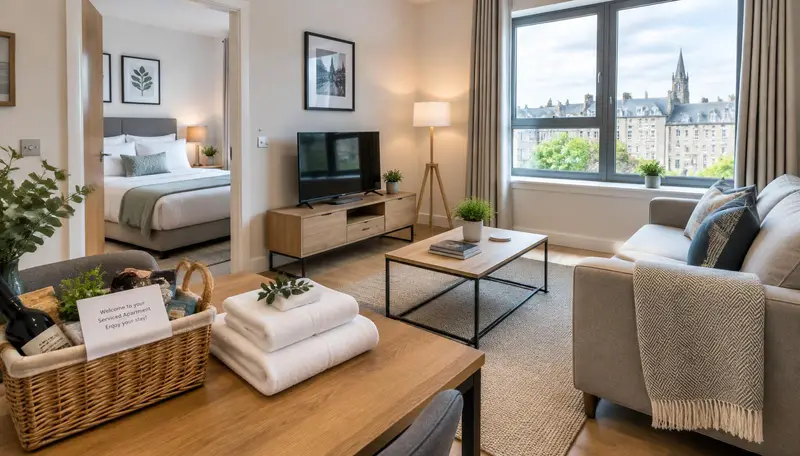
Serviced accommodation (often shortened to SA) is a furnished property let to guests for short stays - from one night to a few months - with hotel-style services such as cleaning, fresh linen, wifi and guest support included in the price. For a landlord, it means letting your property by the night instead of to one tenant on a fixed tenancy.
This guide explains what serviced accommodation is, how it differs from Airbnb, holiday lets and buy-to-let, the rules that apply in 2026, and how to decide whether it suits your property.
What is serviced accommodation?
In the UK, serviced accommodation describes a furnished, self-contained home let on short stays where the guest gets services on top of the bed - that's the "serviced" part. It sits between a hotel and a long-term rental: guests get their own kitchen and living space, like a flat, with the cleaning, linen and support of a hotel.
The term is used in two slightly different ways. In travel and tourism, it simply means any accommodation that includes services, such as hotels, B&Bs and serviced apartments. In UK property, it usually means a house or flat that a landlord or operator lets night by night through Airbnb, Booking.com and direct bookings, with a professional clean between every stay.
What does serviced accommodation include?
- A fully furnished home with a working kitchen
- Professional cleaning, fresh linen and towels between stays
- Wifi, utilities and the property's council tax or business rates covered in the nightly rate
- Self check-in or a meet-and-greet, plus a guest guide
- Guest support before and during the stay
- Toiletries and kitchen basics
Serviced vs non-serviced accommodation
Non-serviced (self-catering) accommodation gives guests the space but few or no services during their stay - for example, a holiday cottage where guests bring their own linen and clean before they leave. In practice the line has blurred: most UK holiday lets now include linen and a professional clean, which puts them firmly in serviced territory.
Who stays in serviced accommodation?
Demand comes from guests who need more space or flexibility than a hotel room, or who are staying longer:
- Contractors and project teams working away for weeks at a time
- Business travellers and staff relocating for work
- NHS and agency staff working near hospitals
- Families visiting relatives, moving house or between homes, including insurance-funded stays after a flood or fire
- Tourists, groups and weekend visitors
- Parents visiting for university open days and graduations
A strong serviced accommodation property usually serves more than one of these groups, which keeps it booked midweek as well as at weekends. You can see what drives demand in different towns on our area pages, such as Leeds, Middlesbrough and York.
Serviced accommodation vs Airbnb, holiday lets and buy-to-let
These terms overlap, which is why people often use them interchangeably. Here's how they compare.
| Serviced accommodation | Airbnb | Holiday let | Buy-to-let | |
|---|---|---|---|---|
| What it is | A furnished home let short-term with hotel-style services | A booking website, not a type of property | A furnished home let to holidaymakers, often in tourist areas | A home let to one tenant on a tenancy |
| Typical stay | 1 night to a few months | Any short stay | Usually 2 nights to 2 weeks | 6 months or more |
| Main guests | Business, contractors, families and tourists | All of these | Mostly leisure | One household |
| Who pays the bills | The host | The host | The host | Usually the tenant |
| Income | Varies night by night | Varies night by night | Varies by season | Fixed monthly rent |
| Day-to-day work | High, unless managed | High, unless managed | High in season, unless managed | Lower |
So is Airbnb serviced accommodation? Airbnb is one of the websites a serviced accommodation property is listed on. Most professionally run SA properties are also listed on Booking.com, Vrbo and direct booking sites, so they don't rely on a single platform.
How does serviced accommodation work?
- Prepare the property: furnishing, styling, safety checks and professional photos
- List it: on Airbnb, Booking.com and other channels, plus direct bookings
- Price it: nightly rates move with demand, including events, seasons and weekdays vs weekends
- Host guests: messages, guest vetting, check-in and support during the stay
- Turn it around: clean, change linen, restock and inspect between every stay
- Look after it: maintenance, compliance and monthly owner reporting
You can run all of this yourself, or hand it to a serviced accommodation management company that handles it for you.
Is serviced accommodation profitable?
It can be, but not every property suits it. Nightly rates can add up to more than a monthly rent, but serviced accommodation also has costs a standard tenancy doesn't: cleaning and linen, utilities, wifi, platform commission, furnishing, insurance, and either your own time or a management fee. The real question is what's left after those costs across a full year, including the quieter months.
It tends to work best when:
- There's year-round demand from more than one type of guest, such as business, contractors and tourism
- The property is easy to get to and photographs well
- The building, lease and mortgage allow short lets
- You're comfortable with income that varies from month to month
Want a realistic view for your own property? We go through the numbers in How Much Can You Earn on Airbnb in the UK?, and we're happy to give you a free, no-obligation income estimate.
The rules for serviced accommodation in 2026
The rules have changed a lot recently. Here's where things stand for properties in England in autumn 2026. Always check the position for your own property with your council and a qualified adviser.
Tax: the FHL regime has gone
The furnished holiday lettings (FHL) tax regime was abolished from April 2025. Short-let income is now taxed like other property income, so the old FHL advantages, such as full mortgage interest relief, no longer apply. Our UK Airbnb tax guide explains what this means for you.
Business rates or council tax
In England, a short-let property is assessed for business rates instead of council tax if it was available to let for at least 140 nights and actually let for at least 70 nights in the previous 12 months, and will be available for at least 140 nights in the year ahead. Smaller properties may qualify for Small Business Rate Relief. If it doesn't meet the tests, it stays on council tax, and councils can now charge a premium of up to 100% on second homes. Our business rates guide covers this in detail.
Planning permission
In most of England, letting your home for short stays doesn't automatically need planning permission, but a council can decide that a full-time short let is a "material change of use". In London, letting a whole home for more than 90 nights in a calendar year needs planning permission. The government has proposed a new planning use class for short lets, but no legislation has been laid yet. If your property will be let full-time, check with your local planning team first.
The national short-let register
The government has said a mandatory register of short-term and holiday lets in England will be fully operational by March 2027. Details such as the fee and what hosts must provide haven't been published yet. Scotland already requires a short-term let licence, and Wales has its own registration deadline of 31 March 2027. Our licensing and regulation guide has the latest.
Mortgage, insurance and your lease
Many standard residential and buy-to-let mortgages don't allow short lets, so speak to your lender or a mortgage broker and get the right consent or product before you start. You'll also need specialist short-let insurance, as standard landlord policies usually exclude paying guests (our holiday let insurance guide explains what to look for). If you own a leasehold flat, check the lease too - many restrict short stays or business use.
Safety
Serviced accommodation has to be safe for paying guests. That includes a fire risk assessment, smoke and carbon monoxide alarms, a gas safety certificate where there's gas, and regular electrical safety checks. Our compliance checklist lists everything to have in place before your first guest arrives.
Serviced accommodation management: your options
There are three common ways landlords run serviced accommodation.
1. Manage it yourself
You keep all the income but take on everything: pricing, guest messages at all hours, cleaning teams, maintenance and compliance. It can work well if you live nearby and have the time. If you want help without handing everything over, an Airbnb co-host can be a middle ground.
2. Rent-to-serviced accommodation (guaranteed rent)
An operator rents your property for a fixed monthly payment and runs it as serviced accommodation themselves. You get a predictable payment, but you give up the extra income, have less say over who stays and how the property is looked after, and you depend on the operator's business staying healthy. Read the agreement carefully, and check it works with your mortgage and insurance.
3. Use a management company
A serviced accommodation management company runs the property for you in return for a share of the booking income. You keep ownership, control and the upside, without the day-to-day work. At MCPI Hosting that covers listing and photography, dynamic pricing, guest communication 8am-10pm with emergency cover overnight, cleaning and linen, maintenance, compliance and clear monthly statements. See everything that's included.
Thinking about serviced accommodation for your property? Get a free, no-obligation income estimate and an honest view of whether it suits your home. See how our management works.
Serviced accommodation FAQs
What is the meaning of serviced accommodation?
Serviced accommodation means a furnished property let on short stays with services such as cleaning, fresh linen, wifi and guest support included. It combines the space of a home with the convenience of a hotel.
Is serviced accommodation the same as Airbnb?
Not quite. Airbnb is a booking website, while serviced accommodation is the type of property and service. Most serviced accommodation is listed on Airbnb alongside other booking sites.
How does serviced accommodation work for landlords?
Instead of one tenant paying monthly rent, the property is let by the night to different guests. The landlord, or a management company, handles bookings, cleaning, guest support and maintenance, and the income varies with demand.
Do you need planning permission for serviced accommodation?
Not always. In England it depends on how intensively the property is used and your council's view. In London, letting a whole home for more than 90 nights a year needs permission. Check with your council before letting full-time.
Do you need a licence for serviced accommodation?
Not in England yet, but a national register is due to be fully operational by March 2027. Scotland requires a short-term let licence, and Wales has its own registration scheme.
Can you get a mortgage for serviced accommodation?
Yes, through specialist lenders and holiday let mortgage products, but many standard mortgages don't allow short lets. Speak to a mortgage broker before you start.
What insurance does serviced accommodation need?
Specialist short-let or serviced accommodation insurance that covers paying guests, public liability, buildings and contents. Standard landlord insurance usually won't cover it. See our guide to holiday let insurance for the questions to ask.
What is non-serviced accommodation?
Accommodation where you get the space but few or no services during your stay, such as a self-catering cottage where guests bring their own linen and clean before they leave.
This guide is general information, not tax, legal or financial advice. Last checked October 2026.