9 November 2026 · 9 min read
How to Set Up an Airbnb in the UK: A Landlord's Step-by-Step Guide
Ten steps to setting up an Airbnb in the UK, in the right order: permissions, insurance, safety, furnishing, photos, pricing, channels, day-to-day running and tax.
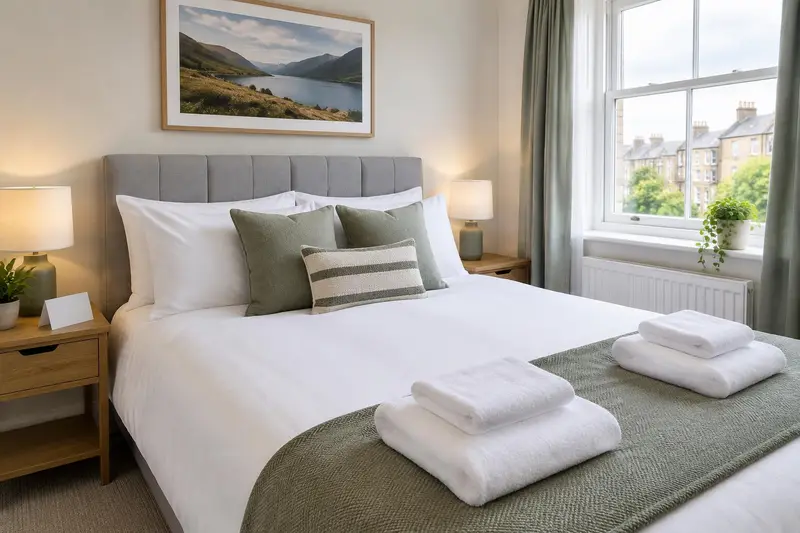
Setting up an Airbnb in the UK takes more than a few photos and a listing. Before your first guest arrives, you need permission to let, the right insurance, a safe property, a listing that wins bookings and a plan for running it every day.
This guide takes you through the setup in the order we work through it with landlords, so nothing gets missed. It's written for owners in England, with notes for Scotland and Wales where the rules differ.
How do you set up an Airbnb in the UK? The short answer
There are ten steps, and the order matters. Permissions and safety come before furniture and photos, because they decide whether the property can be let at all.
- Check you're allowed to short-let the property
- Arrange specialist holiday let insurance
- Make the property safe for paying guests
- Register or get a licence where it applies
- Furnish and equip it for the guests most likely to book
- Take professional photos and write the listing
- Set your prices, cleaning fee and minimum stays
- Choose where to list it
- Plan check-in, cleaning, maintenance and guest messages
- Sort out tax, business rates and record-keeping
Step 1: Check you're allowed to short-let
Start with the paperwork, because everything else depends on it.
Your lease. If the property is leasehold, read the lease before you do anything else. Many leases restrict business use or lets shorter than a set length, and a freeholder can enforce that.
Your mortgage. Residential and standard buy-to-let mortgages don't automatically allow holiday letting. Some lenders allow it under your existing terms, while others need consent or a different product. Speak to your lender first.
Planning. In England, your local planning authority decides whether short-letting needs planning permission, based on how the property is used and the effect on neighbours. In Greater London, a whole home can usually only be let for short stays for up to 90 nights a calendar year without planning permission. Some properties, particularly in National Parks, also carry planning conditions about holiday use, so check the planning history.
Scotland and Wales. Scotland requires a short-term let licence from the local council before you take bookings. In Wales, visitor accommodation providers must register with the Welsh Revenue Authority from October 2026. Our guide to Airbnb rules and regulations in the UK covers each nation in more detail.
Step 2: Arrange the right insurance
Standard home and landlord insurance usually won't cover paying guests. A holiday let needs a specialist policy that covers buildings, contents and public liability for short stays, and ideally loss of income if the property can't be let after an insured event.
Booking platforms have their own protection schemes, but they come with limits and exclusions, so treat them as an extra rather than a replacement for your own cover. Our guide to holiday let insurance explains what a good policy should include.
Step 3: Make the property safe for paying guests
The government's guidance on letting a holiday home in England points hosts to the official fire, gas and electrical safety guidance. In practice, that means:
- Fire safety. Carry out a fire risk assessment and record it in writing. For smaller properties (up to 10 guests and no more than two floors), follow the government's guide to making small paying guest accommodation safe from fire, which covers smoke alarms, escape routes and fire doors. Larger properties follow the main guidance for sleeping accommodation.
- Gas. If there are gas appliances, follow the HSE's guidance for landlords: an annual gas safety check by a Gas Safe registered engineer, with the record kept. Fit carbon monoxide alarms near fuel-burning appliances, including wood burners.
- Electrics. Follow the HSE's electrical safety guidance. A periodic electrical inspection by a qualified electrician is the simplest way to show the installation is safe, and portable appliances should be checked too.
- Furniture. Upholstered furniture and mattresses should meet the fire safety rules, with their labels left on.
- Energy Performance Certificate. Check whether your property needs one.
Your insurer will ask about most of this, so it pays to have the certificates in one place before you list.
Step 4: Register or get a licence where it applies
England has no short-let licence yet, but a mandatory national register for short-term lets is expected to begin in March 2027. In the meantime, check with your council whether any local rules apply to your address.
Scotland already requires a licence, and Wales requires registration with the Welsh Revenue Authority. If your property is in either, have this in place before you go live.
Step 5: Furnish and equip it for the guests most likely to book
The best-performing short lets are furnished for a specific guest. A flat near a hospital or business park needs a desk, fast wifi and a washing machine for longer stays. A coastal cottage needs somewhere to dry wet kit and a dog-friendly policy. A city apartment for weekend breaks needs a great bed and a well-equipped kitchen.
Whatever the property, guests expect the basics to be right:
- Good-quality mattresses with protectors, and at least two sets of linen and towels per bed
- Blackout or lined curtains in the bedrooms
- Fast, reliable wifi and clear instructions for the TV and heating
- A fully equipped kitchen, including the things people forget, like a corkscrew, a baking tray and a sharp knife
- Self check-in with a smart lock or key safe
- A short house guide covering check-in, parking, bins, wifi and who to call
Step 6: Take professional photos and write the listing
Guests choose with their eyes first, so professional photos are one of the best investments you'll make. Shoot in daylight, show every room, and lead with the photo that sells the property best, whether that's the view, the living space or the main bedroom.
Write a title that tells the right guest it's for them, such as parking for contractors or a wood burner for walkers. Then describe the property honestly, list every amenity accurately and set clear house rules. A listing that matches the stay leads to better reviews, and reviews drive future bookings.
Step 7: Set your prices, cleaning fee and minimum stays
A fixed nightly rate leaves money on the table. Demand changes with school holidays, events, weekends and the weather, so prices should change daily to match. Price too high and the calendar stays empty, price too low and you fill nights you could have sold for more.
Build platform fees into your rates rather than absorbing them. Airbnb now takes a single host fee from each booking, which our guide to Airbnb fees in the UK explains. Set a cleaning fee that covers a proper changeover, using our guide to Airbnb cleaning fees, and use minimum stays to avoid awkward one-night gaps in busy weeks.
To see what your property could realistically earn once fees and costs are taken off, read our guide to how much you can earn on Airbnb in the UK.
Step 8: Choose where to list it
Airbnb is the obvious starting point, but it isn't the only one. Booking.com, Vrbo and direct bookings reach different guests, and listing on more than one channel means you aren't relying on a single platform for your income.
The catch is admin. Every channel needs its calendar kept in sync to avoid double bookings, its messages answered and its pricing kept in line with the others.
Step 9: Plan check-in, cleaning, maintenance and guest messages
This is the part most new hosts underestimate. Every stay involves a booking enquiry, pre-arrival messages, check-in, questions during the stay, a changeover clean, fresh linen, a condition check and sometimes a repair.
Before you take your first booking, decide who will:
- Answer guest messages quickly, including evenings and weekends
- Clean, restock and check the property after every stay
- Wash and replace linen and towels
- Fix a broken boiler or a lost key at short notice
- Deal with a problem guest or a complaint from a neighbour
You can do it yourself, bring in a co-host or hand it to a management company. Our guide to choosing between a co-host and a management company compares the options.
Step 10: Sort out tax, business rates and record-keeping
Short-let income is taxable, and the furnished holiday lettings tax rules ended in April 2025, so holiday lets are now taxed like other residential lettings. Keep a record of every booking, payout, platform fee and expense from day one. Our guide to Airbnb tax in the UK covers the basics.
Check too whether your property will pay council tax or business rates. In England, a self-catering property that's available for at least 140 nights a year and actually let for at least 70 is assessed for business rates instead, and our business rates guide explains the tests.
How long does it take to set up an Airbnb?
It depends mostly on the first four steps. Lender consent, planning checks and safety work can take weeks if something needs fixing. Once the property is permitted, safe and furnished, photos, the listing and pricing can be ready quickly. When we take on a property that's ready to let, we can usually have it live within about a week.
Should you set it up yourself or use a management company?
Setting up and running an Airbnb yourself keeps every pound of income, but it's a job that runs seven days a week. A full-service management company handles the setup, listing, pricing, guests, cleaning and maintenance for you, in return for a share of the booking income.
If you're switching from a tenancy, our guide to switching from long-term to short-term letting covers the steps from the landlord's side. If you'd rather hand the whole thing over, see how our Airbnb management works.
Setting Up an Airbnb in the UK: FAQs
Do I need permission to Airbnb my property in the UK?
Often, yes. Check your lease and your mortgage first, then ask your local planning authority whether short-letting needs planning permission. In London, whole homes can usually only be short-let for up to 90 nights a calendar year without permission. Scotland requires a licence and Wales requires registration.
What safety checks do I need for an Airbnb?
In England, the government's guidance points hosts to a written fire risk assessment, the HSE's gas safety guidance (an annual check by a Gas Safe registered engineer if there is gas), electrical safety guidance, smoke and carbon monoxide alarms, and furniture that meets fire safety rules.
Do I need special insurance for an Airbnb?
Yes. Standard home and landlord policies usually exclude paying guests. You'll need specialist holiday let insurance with public liability cover, and platform protection schemes shouldn't be relied on in its place.
How much does it cost to set up an Airbnb?
It depends on the condition of the property and how much it needs. Budget for safety checks, insurance, professional photos, linen and towels, kitchen essentials, a smart lock or key safe, and any furniture or repairs. A property that's already well furnished will cost much less to get ready than an empty one.
Can I turn my home into an Airbnb if I have a mortgage?
Only with your lender's agreement. Some lenders allow short lets under your existing mortgage, while others need consent or a holiday let mortgage. Letting without permission could breach your mortgage terms, so speak to your lender before you list.
Once you're live, you can also accept bookings of 28 nights or more. Our guide to long-term stays on Airbnb covers how they work, who books them and the risks to check.
Want your property set up and run for you?
We handle the setup, listing, pricing, guests, cleaning and maintenance, so your property earns without the day-to-day work. Get a free, no-obligation estimate of what it could earn. See how our management works.